Friday, December 11, 2009

Rockin' Robin (Tweet Tweet Tweet)

  • A smarter, prettier version here.
  • A dorkier version here.
For our SF Renaissance project we decided to use Twitter as our new media put to pedagogical use.

Why Twitter?

Interaction and conversations among students in the classroom:

  • Provides a dynamic, easy-to-follow feed for students in the classroom
  • Students can easily view and interact with other students in the classroom
  • Students can easily reply to or re-tweet their classmates’ tweets
Student work made public:
  • Dialogues are taken beyond the classroom: anyone can see the tweets
  • Students become aware of the publicness of their work
  • Students become more responsible over the work they produce and put out there
  • Possibilities for knowledge creation is expanded as students are able to "follow" and read other Twitter users' tweets that are related to the SF Renaissance, etc. For instance, students are able to have dialogues with students from other universities who may be tweeting about the SF Renaissance as well
How:

Users can provide links to pictures, videos, websites, etc. on a tweet.

Twitter can be used throughout the semester as a platform for students to publish their work in. For instance, students are encouraged to post tweets about their latest class blog, essay, etc., so that their work is more visible and invite more interactions, and more importantly, Twitter's interface provides a more accessible platform for students to be able to see one another's works. Rather than using RSS feeds which can get tedious, Twitter is used as both feeds to student work, as well as to produce information about specific topics.

The use of Twitter encourages more production of media and knowledge in and out of the classroom.

For a class the size of our seminar, with 15-20 students, we would have each student create their own twitter account and have all the students "follow" one another via their accounts. During the unit, the students would be required to search for artifacts or resources that relate to the SF Renaissance and to "tweet" about them. This would take the conversation out of the classroom and would get the students dialoguing with one another through twitter about the unit subject. Individual students would be assigned particular topics relating to the SF Renaissance (i.e. drugs & literature, poetry readings, the 1950s, etc.).

The key step in the fruition of the entire project would be that the students would discuss the "tweeted" artifacts in class, decide what has reliability, value, worth, etc. and the agreed upon "tweets" would be added to a class twitter account solely created to "TweeT" about the topic of SF Renaissance. This would be an account where those across the globe interested in the beats, would be able to follow the account to get valuable information, articles, artifacts, etc., (and most ideally from a class being taught in San Francisco). This particular account would also be available for additions by future classes. The future classes would be able to learn from the work produced and to add their own. This "research" and analysis of the
artifacts brought in would give the students the much needed practice to understand what information online has validity, value, reliability, etc.

If the class were taught here in SF, it would be an added benefit to have certain students, with the capability, to post "location tweets". This way, there would be actually "tweets" that would reference particular locations in the city (relating this twitter project to our work on mapping the SF Renaissance in the city)."

Concerns to consider:
  • For a larger class, the same process of setting up separate topics within the context of the beats would apply, but to groups rather than individuals. The groups would then come together in class to discuss their themes separately and report to the class together.
  • Having 60 plus students "tweeting" would be a little much to consume for the each individual student and the teacher, so the students would do research together as groups and bring their suggested artifacts into class to present. The same final step would apply here, where the decided upon artifacts would be posted to the SF Renaissance Twitter account.

  • This study brings up a couple of concerns:

    • 65% of tweets are still tweeted from a desktop browser, so only 35% are from mobile applications. We need to find out how many students in the class really would have constant access to the tweets. If not everyone does, do we still go ahead with the assignment? If so, is there some way to limit the tweeting of those with mobile capabilities so that those without do not feel left out from the constant exchange of information? What are the ethical-pedagogical implications of having only some of the class with instantaneous access to the tweets, while others only certain times during the day?

    • 60% of tweeters quit within the first month. Short of the forceful requirement that students must participate in the tweeting, what preparation can we do as a class to make them see the value of Twitter and tweeting as learning tools?

  • For students outside of the Bay Area and New York City Area, are there geolocation exercise alternatives that could incorporate their own local/regional literary spatial-rhetorical histories?

    • Would doing so veer off into a literary period/movement other than the San Francisco Renaissance? Perhaps this would be fine as a gesture towards going into the next unit of the class, if the idea is for the same kind of new media exercise to be just as engaging for students in the rest of the country (and world).

Sunday, November 15, 2009

Glogs for a Harlem Renaissance Assignment

Big questions:
How do expression and culture interact or inform one another? How do the Harlem Renaissance’s different forms of expression (fashion, visual arts, music and dance, text and literature) contribute, both individually as well as together, to its overall expressivity? How do we see this working through Nella Larsen's Quicksand in particular and literature in general?

Skills needed:
  • Determining how a certain expressive medium contributes to a creative movement.
  • Visual literacy—i.e. how to read pictures and photographs for meaning.

Assessment:
I first questioned the pedagogical usefulness of Glogster and glogs. When I thought that, I was then only thinking in terms of it as supplemental to (or potentially substitute of) lectures. But, after doing the glog itself, I realise that they can be a powerful means for research. Before creating this glog, I had very little knowledge of the Harlem Renaissance. During my glog creation, I found out so much more about it. So, although I still fail to see glogs as supporting lectures in any way, I do see them as an effective way to get students to do research that goes beyond the written text and into cultural context. The glogs will therefore be assessed by their level of coverage and engagement.

Assignment:
Identify a certain cultural theme you are interested in that Nella Larsen's Quicksand uses as a means for the characters and/or settings to express themselves. You may draw inspiration from this example glog from a previous class, and choose one of the themes of clothes & fashion, music & dance, visual arts, or text & literature. You are certainly not limited to these, and may choose others not yet addressed in our class discussions. Please consult your classmates and myself if you are unsure about your theme.

Then, using the skills you have gained from our previous assignment to read images and cultural objects, create your own glog to present to your classmates. This glog should help your classmates understand your particular theme as it is presented during the Harlem Renaissance and in Quicksand. Also think about trying to connect what your research informs you about the Harlem Renaissance and how it relates to passages or scenes in Quicksand, as well as how to present that on your glog so your classmates can make the same connection(s).

Saturday, October 10, 2009

Text/Context part 2: Pedagogical Uses

Whitman Project version 3 (15.10.09)

[An assignment prompt based on this lesson plan, along with versions 1 (08.10.09) and 2 (13.10.09) attached]


We've established that the writing/creation of a text, such as Walt Whitman's poem, Leaves of Grass, can be dynamic, not static--and even continuously dynamic with our, his audience's, own "remixing" of it. But what about our reading/interpretation? Can our reading of the work be just as dynamic--i.e. changing depending on certain contexts? Although there are many variables that can affect our reading (i.e. more internal ones such as your age, race, sex/gender, literacy/literary training, even your mood at the time, and so on) we are here focusing on the space(s) where you may find this text. The most basic example may be hermeneutic differences between reading said poem in a printed book compared to online on a website, and even then there are many variables from book to book, site to site.


Day 1 Readings and Discussion
Before jumping into Whitman's poem, let's get acquainted with the analytical approach and process you'll be using. Text and textuality have been experiencing "the visual turn" in which the ways we have conventionally defined them are more and more blurring with imagery--that is, the way we use media today necessitates a spectrum from the written text using the letters of the alphabet at one end of the spectrum, to the visual images and objects at the other end, to everything in between, such as the spaces the texts are placed in, using different font typefaces for different effects, the way they are manipulated, etc. First, read Purdue OWL's primer on visual rhetoric--it has four pages that you can navigate at the bottom of the page. Then read through Stanford's four examples of reading images--again, navigation on the bottom.

N.B. These readings may be deceivingly elementary, but they will greatly help you with the upcoming assignment. We will discuss these readings in class.


Day 2 Assignment and Discussion
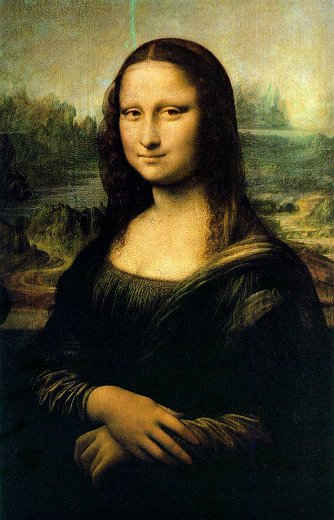
Choose a cultural "text" that you like or are interested in, other than Whitman's Leaves of Grass--perhaps another poem, a photograph or painting, a film's scene, etc. Then think about two or more different spaces where you have seen or can find this text. E.g. How is the Mona Lisa painting (a text) different when we view: the original painting first-hand in The Louvre vs. as a digital image attached to its Wikipedia entry and all that informative text around it vs. as a print pattern on a mass-produced Andy Warhol pop art postcard? You are welcome to use this example or your own chosen text. Be creative in thinking about where you might find your chosen text--nothing is off-limits! Write an informal, bulleted-points list response about how the way you read your chosen text inscribes different meanings and values depending on where you find it and how it is presented.


Day 3 Assignment and Discussion
When you feel that you have a better understanding of how different contexts can affect the way we read/interpret a text or work, write a similar analytical response in a more formal blog-essay with Whitman's Leaves of Grass, again using two or more different spaces where you have seen or can find the poem. The reason I continue to leave this open is so that you have freedom in exploring where the text may appear. However, in case you are hard pressed to find some, here are some suggestions to start you off (feel free to go out and find other, unique, unusual places where you come across this text):

Further things to think about in your responses: Who has placed the text in that space? And for what purpose--personal, professional, academic, leisure, other? How do you know--i.e. what are the characteristics of the context that make you think so? What meanings and values does the space allow or deny the text?

The big questions to tackle at the end: How does your reading/interpretation shift around depending on where you find a text? What might your analyses say about texts and cultural contexts in general?

Thursday, October 8, 2009

Text/Context part 1: As Cultural Object

When reading a certain work through a New Historicist lens, not only am I interested in the cultural objects mentioned directly or invoked through certain actions, but even more so I am interested in how the actual text itself works as a cultural object. For instance, in Walt Whitman's Leaves of Grass, there are various references to writing, printing/publishing, and books:
Writing and talk do not prove me,
I carry the plenum of proof and every thing else in my face,
With the hush of my lips I confound the topmost skeptic.

[...]

To walk up my stoop is unaccountable . . . . I pause to consider if it really be,
That I eat and drink is spectacle enough for the great authors and schools,
A morning-glory at my window satisfies me more than the metaphysics of books.

[...]

My words are words of a questioning, and to indicate reality;
This printed and bound book . . . . but the printer and the printing-office boy?
But, while these lines inspire me to think about these literacy objects as cultural ones that may inform meaning in/of this work, I find it much more challenging to think about how the poem's written form, in its various contexts, functions culturally--i.e. how it functions in its original form, vs. a facsimile, vs. print in a hard copy today, vs. electronic print as part of an archive, etc.

Monday, October 5, 2009

Archives, Whitman, and the Transatlantic Remix

Although archives readily present scholars and students with much information, navigating them can be somewhat of a challenge. It’s relatively easy to move through one like Project Gutenberg, because it’s a bare-bones collection of texts. But what about one more rich in features? To test the “scholasticity” of one such archive, I am here looking at the Walt Whitman Archive, specifically concerned with an example class lesson that teaches his Leaves of Grass (1855) in terms of the questions: “Does Whitman negotiate the individual’s space/place/role in the collective? How? Why?,” and in what ways we can remix the poem in order to defamiliarise it and read it with a fresh perspective.

One way for scholars and students to navigate an archive such as this is through the mysterious ways of online tools such as TokenX—no, not the latest derogatory term the GOP has for Obama, but an online tool that has been customised for this particular archive. My colleagues (blogroll bar to the side>>) have already done such a bang-up job of tinkering with it through every nook and cranny. So, at the risk of being repetitive, I am instead looking at the poem through other means: by defamiliarising it through foreignness.

I am here looking at a "transatlantic remix" of the poem, not one I've done myself, but the British edition that is already catalogued in the archive. Whitman's 1855 original begins with the lines: "I CELEBRATE myself, / And what I assume you shall assume, / For every atom belonging to me as good belongs to you." The "I" is clearly an "American 'I'" for an American audience because, even though it is singular first-person speaking to a singular second-person "you," it offers an invitation to assume something together. The speaker begins by establishing that the the idea of the individual American is confluent with the idea of American society.

On the other hand, the first edition printed in 1868 Britain, our "transatlantic remix," begins with a stanza/short poem that wasn't even in Whitman's 1855 original: "I HEARD that you ask'd for something to prove this puzzle the New World, / And to define America, her athletic Democracy, / Therefore I send you my poems that you behold in them what you wanted," and didn't appear in any American edition until 3 years later in the American 1871 edition. That Whitman was growing in notoriety in the international scene, even so far as to gain a loyal fanbase across the pond, may have made Whitman and/or the British edition's editors choose this stanza to open with. Although, however diplomatic or friendly the gesture, the Othering of the non-American reader creates a sociolinguistic chasm, within which very little confluence of the individual and society takes place.

Saturday, October 3, 2009

Bleep

It's Banned Books Week, which I find hard to swallow, not just for the appalling literary censorship that is still happening in this day and age, but also because I would have thought technology would have circumvented many of the issues by now. As the Iranian elections proved, the dissemination of information is now readily done over the internet. Why isn't this happening with book$, novel$, creative work$? Oh...

Sunday, September 27, 2009

U Penn's CFP and Category Breakdown: A Rant

Continuing somewhat with the topic of inter- and trans-disciplinarity...

I've been following U Penn's Call for Papers site for some time now. I say "site" because it is no longer just a single page where the CFPs are dumped and clumped together arbitrarily, where we had to sift through endless calls of which only about 1 of every 20 or so caught our interest. After growing into something too unwieldy, the administrators divided it into several pages using your typical categories--Eighteenth Century, Gender Studies & Sexuality, Medieval, etc. Fantastic! It was great that I could then check out the Rhetoric section without having to waste my time stumbling upon a call for the postcoloniality of Beowulf or whatever somesuch that is irrelevant to me at the time. It was clear that the field of English studies was becoming more and more superspecialised.

Along with a growing interdisciplinary movement, however, came CFP posters who wanted to post matter that ran across more than one category and still had to post manually in each of the different ones. So, sometime during the last few months, the administrators "developed" the site's functionality. Now, if you're someone wanting to post a CFP you think deserves to be in several categories, all you need to do is check categories you deem applicable. This new system requires a certain degree of professional consideration. But what we get now are overzealous calls that, through the seductive simple click of a New Media feature, checkmark every single box and revert our practices. After following Jessica's suggestion to subscribe to RSS feeds from the site, its return to an unnecessary barrage of irrelevant CFPs became even more apparent to me.

Example #1: The 2010 National PCA Fat Studies Panel
In Cultural Studies? Definitely. In Popular Culture? Makes sense. But in African-American?! Wow, what kind of assumptions are the panelists working on here?

Example #2: Red Feather Journal: An International Journal of Children's Visual Culture
In Children's Literature? Definitely. In Film & Television? Sure. But in Classical Studies?! I'm not a classicist, but I like to think I know about what constitutes as classical studies. If I were a classicist, I may just feel the urge to post in the Children's Lit section a CFP about the virtues of worshipping the Greek pantheon of gods, or the necessary homoeroticism of Homer's Iliad, or the sublime political joy of death by drinking hemlock--because we should start our American kids early on polytheism, homosexuality, and capital punishment. How do you like that, children's lit?

Facetiousness aside, I do realise that there is a certain intellectual stimulation in academia becoming more and more interdisciplinary, which is a positive way to look at these recent developments. Let's do an arbitrary test based on the two examples above. How about: for #1 "Donna Haraway and the Posthuman Prosthetic Trope in Tyler Perry's Use of Fat Suits," or for #2 "Plato's Republic and Philosopher Kings in Sendak's Where the Wild Things Are." Sound like interesting papers. On the other hand, when we can apply any of our specialisations to any CFP at random, what is the point of using categories?

For me, it has to do with efficiency. We are, most of us who regularly visit the CFP site, busy busy little scholars/professors/graduate students. When I go to my home category of Rhetoric, I don't want to think about how rhetoric or composition apply to this CFP about popular romance narratives that has been posted there as if on a whim. If, one day, I wake up thinking: "Hmmm... I should teach Obama's rhetorical moves through a fresh perspective, and I think Nora Roberts is on to something," I will gladly set aside time to look around in appropriate categories like Twentieth Century or Popular Culture.

My concerns may seem rather trivial and exaggerated, but they have larger, ideological implications in the way we conduct this practice: The way certain CFPs feel forced upon me is the same feeling I get from Amazon or eBay dealers when they tack on irrelevant search tags to their products in order to get more customer hits. And that, the capitalist-institutional pressure, is what I guess will always determine our noble pursuit of knowledge, including our efforts with U Penn's CFP site.

Ultimately, it all comes back to the "publish or perish" anxiety that we experience. Likewise, we need more people to come to our conferences, to make a name for ourselves, to get more funding and grants, and so on. What I'm afraid all this might result in (if not already) is a category crisis because we are intellectually exhausted, have nowhere else to go, and are cannibalising one another's areas. Nonetheless, I do think the CFP site is a very practical site even so. But now I'm starting to formulate thoughts on the cultural, economic, and institutional pressures that are causing my concerns, and it is building up to be a whole paper, so I'll stop now, and save it for a rainy day.